
Serving Waitsburg, Dayton and the Touchet Valley


Serving Waitsburg, Dayton and the Touchet Valley
The Canadair CL-415 Super Scoopers droned above camp, seemingly less agile than their larger jet-propelled counterparts.
A pair of fiery California tortoiseshell butterflies basking on streamside rocks.
A 12-inch brook trout is a legitimate trophy when caught in a mountain stream narrow enough to step across. This quintessential specimen was a sight to behold and a feast for the table.
A three-weight fiberglass fly rod and an intricate maple-burl fly box make a beautiful pair for skinny water and wild trout.
Picnic-table food doesn't always photograph well, yet butter-roasted brook trout and mashed homegrown potatoes make a perfect pair.
Tiny mountain streams are scenic from every angle, including the emerald algae and the olive, crimson, pink, and blue worn by trout thriving beneath the water's surface.
An orange haze hung over the meadow to the southwest. Another smoke plume billowed behind rugged peaks to the east. A red-bellied McDonnell Douglas MD-87 air tanker lumbered out of the smoke. It looked like any passenger jet, with windows and two engines near the tail, except this jet's cargo capacity was 3,000 gallons of water or fire retardant. Just one of many planes executing a full aerial assault on the nearby fires.
The jet engines roared overhead, and to the east, one or two every five minutes. I stood like a lone tree in the grassy meadow, fly-fishing rod in one hand and a Nikon DSLR with a 500-millimeter zoom lens in the other. I'd fished this mountain meadow many times, but this experience was unique.
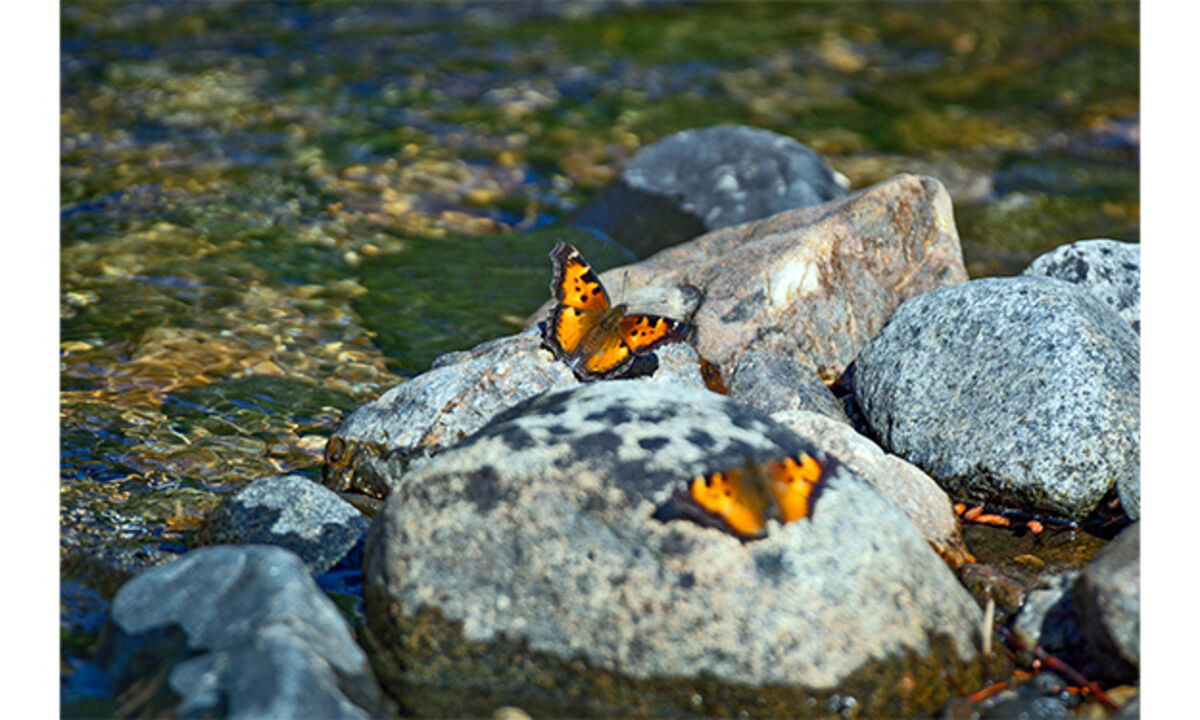
A pair of fiery California tortoiseshell butterflies basking on streamside rocks.
The creek meandering into the forested canyon held brook trout of all sizes. The water was narrow, shallow, and warmer than usual, yet the fish were no less feisty. Orange-and-black California tortoiseshell butterflies fluttered among white and purple wildflowers. Sand-colored grasshoppers crawled across the shrub-steppe landscape. Everything but the grasses and sage conformed to a wildfire color palette, so I chose a pink, sand, and gray foam-bodied hopper with rubber legs.
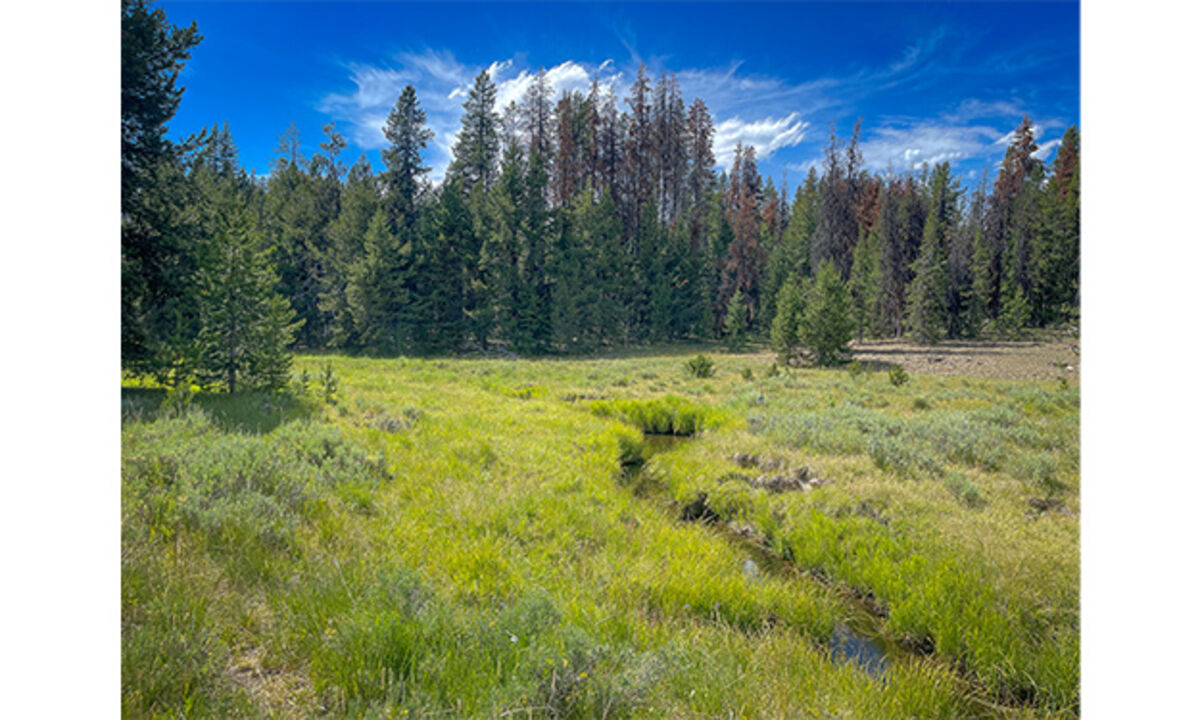
Tiny mountain streams are scenic from every angle, including the emerald algae and the olive, crimson, pink, and blue worn by trout thriving beneath the water's surface.
The fly plopped heavily into the calm waters of a deep bend in the creek, having barely slipped in between the overhanging grasses. Ripples spread from the point of impact, followed by the splash of a fish erupting on the fly. Picking up the 13-foot tenkara rod, I set the hook perfectly, then transported the fish from the aquatic realm to the terrestrial. I thought it fitting that the brook trout's fiery orange belly matched the wildfire smoke haze, the flames, and the belly of the air tankers.
Another tanker approached as if on cue – a British Aerospace 146 that appeared to be bleeding pink fire retardant. It was smaller and stouter than the MD-87, propelled by four wing-mounted engines, yet it carried the same 3,000-gallon fuselage capacity. It passed overhead, offering a close look at the plane's unique payload modifications.
"Can heavy smoke starve a jet engine of oxygen?" I wondered, though I knew the answer was "yes." Fortunately, professional pilots know better than to enter a smoke screen that dense.
Returning to the brook trout, I marveled at its beautiful pink and blue speckling, which contrasted with its deep olive dorsal coloration and vermiculation. Fall spawning is the only time you'll see one more dapper. I cut my fly-fishing teeth on Appalachian brook trout and struggle to kill them. But upon reminding myself that they're tasty invasive species in the western U.S., I thumped its head and bagged it for roasting over the campfire in a puddle of salted butter.
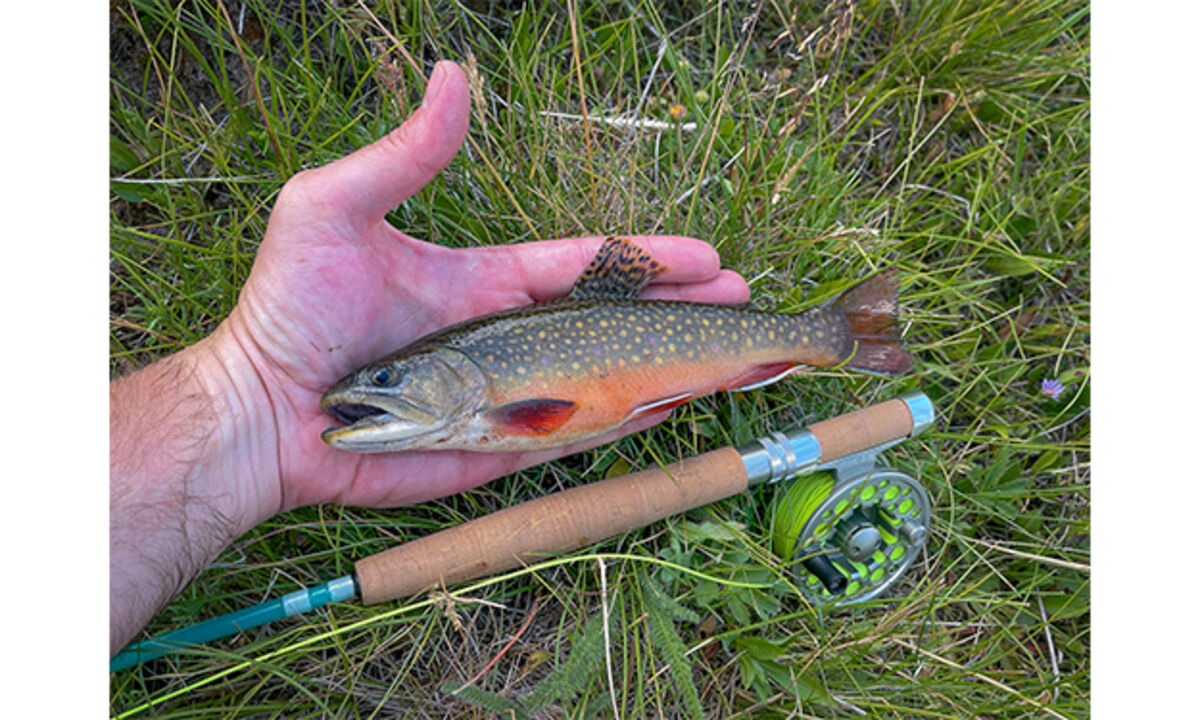
A 12-inch brook trout is a legitimate trophy when caught in a mountain stream narrow enough to step across. This quintessential specimen was a sight to behold and a feast for the table.
Camp had been fogged in by smoke from heavy winds pushing up from the southwest. Packing up and evacuating before nightfall crossed my mind, but the U.S. Forest Service's daily check-ins brought reassurance. There were four ways out of camp, which at least gave the illusion of safety and helped push the concern out of mind.
Kneeling in the creek behind camp, I slid a knife from the fish's vent to its gills, then cut down behind the head and pulled out the unwanted bits, tossing them far into the stream's current. The fish cleaned up nicely in the cold mountain water, their orange muscle as stunning as their painted skin. I laid them on aluminum foil with a couple of tablespoons of butter, folded them up, and set them over the small flames of a pine-twig fire.
Golden and purple potatoes from the garden boiled on the camper stove as I sipped a dark, rich stout by the fire. The butter crackled in the foil packets while another plane droned overhead. Not a jet this time. It was a Canadair CL-415 Super Scooper that fills its belly by skimming the surface of a lake or large river. Its boxy design, amber paint job, and "FIRE" painted in red beneath the wings were a dead giveaway. A second soon followed as they circled above the trees from north to east, preparing to drop their 1,600-gallon payloads.
Halfway through my stout, I pulled the fish from the fire and checked the potatoes. They were perfectly soft for mashing into a creamy texture with butter, salt, and pepper. The delicious aroma of wild trout and warm butter rose from the foil packets as I carefully pried them open. Lifting the fish by the tip of the spine, I slid the fork along the underside of the spine to cleanly separate the meat from the bone, then flipped the fish and repeated the process. There's no simpler way to debone fish. In my humble (but experienced) opinion, there's no better-tasting fish than wild mountain brook trout. No seasoning required. Slightly sweet, mild, and firm, it pairs perfectly with buttered potatoes.
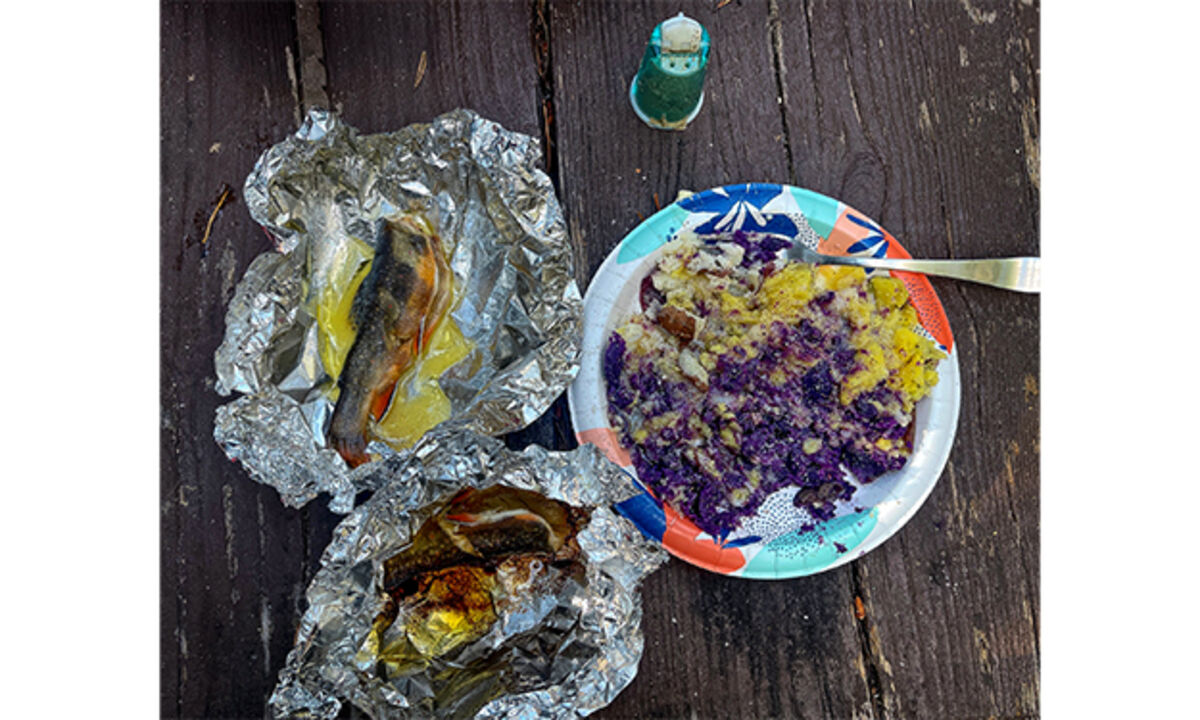
Picnic-table food doesn't always photograph well, yet butter-roasted brook trout and mashed homegrown potatoes make a perfect pair.
Allison Krauss and Union Station ended the day as I sipped a nightcap of pecan praline whiskey, the creek's background rush sounding like applause. When the glass was empty, I crunched through the gravel toward the camper and climbed the stairs to the bed that would sleep far better than anything pitched in a tent.
The roar of a jet engine grew closer as eyelids grew heavier. Poignant dreams came to life as the jet passed, its roar fading. Wildfire flames licked over the ridge as the fly rod bent under the weight of another brook trout. There was no fear or urgency-only the carefree sense of the wilderness and the acrid aroma of wildfire. Tomorrow would be another day of chasing fins under fire.










Reader Comments(0)